How to Choose an Amazon DSP Agency in 2026 (Checklist)
Last updated: August 2026

Short answer: how do you choose an Amazon DSP agency?
Choose an Amazon DSP agency based on four verifiable signals, not on rankings or case study logos: (1) confirmed Amazon Ads Verified Partner status, (2) programmatic data access through the Advertising API and SP-API rather than manual console exports, (3) demonstrated Amazon Marketing Cloud (AMC) query fluency, and (4) a documented onboarding process with weekly reporting during the first 60 to 90 days. Expect a minimum monthly DSP media spend commitment between $15,000 and $50,000, separate from the agency's management fee.
Amazon opened up self-serve DSP (Demand-Side Platform) access to lower spend tiers in 2026, and Fire TV, Twitch, and Alexa inventory keeps expanding inside the walled garden. That shift means more brand owners are shopping for an Amazon DSP agency for the first time, often without knowing what separates a real Amazon specialist from a generalist shop that bolted DSP onto its media offering last quarter.
Here's the problem I keep running into: brands spending $20K or more a month get pitched by five agencies in a single month, all claiming "full-funnel Amazon expertise," and none of the decks answer the questions that actually matter. Pick wrong, and you've burned through a minimum spend commitment before you even see clean attribution data.
This isn't a ranked list of "top Amazon DSP agencies." Those lists go stale within months and tell you nothing about how an agency operates day to day. What follows is the vetting checklist itself: the questions, spend thresholds, and reporting standards worth demanding before anything gets signed.
- Why "best Amazon DSP agency" lists are mostly useless
- What changed in 2026: lower DSP minimums, more noise
- The 9-question vetting checklist
- What a Verified Partner setup actually looks like
- Red flags in DSP agency pitches
- What to have ready before your first DSP campaign
- In-house vs agency vs hybrid
- Mistakes to avoid when hiring
- FAQ
Why "Best Amazon DSP Agency" Lists Are Mostly Useless
Search "best Amazon DSP agency" and you'll find a dozen listicles ranking the same twenty names, usually sorted by whoever bought the most backlinks or paid for placement. None of them tell you whether an agency has actual Advertising API access, whether their AMC setup is real or a slide in a pitch deck, or whether the account manager assigned to your business has ever touched a Fire TV campaign.
Agencies also churn staff constantly. A shop that had a strong DSP team in 2023 might have lost its whole programmatic desk by 2025. A ranking snapshot from a year ago is not a reliable signal today. What is reliable: a checklist of process questions that don't go stale, because they test how an agency operates, not who they used to employ.
What Changed in 2026: Lower DSP Minimums, More Agencies, More Noise
Amazon has continued pushing DSP access further down-market, lowering the entry point for self-serve campaigns and expanding inventory into Fire TV, Twitch, and Alexa surfaces. That's a real shift from a few years ago, when DSP was mostly reserved for enterprise vendors running six and seven-figure annual budgets through managed-service reps.
The practical effect: a lot more mid-size sellers, brands sitting around $20K to $100K in monthly ad spend, are now getting cold outreach from agencies offering "DSP management" as a bolt-on to their existing Sponsored Products retainer. Based on our agency-side observations across Canadian and European accounts, a meaningful share of these newer DSP offerings are staffed by the same team running SP and SB campaigns, with no dedicated programmatic or AMC specialist added to the account.
That matters because DSP is not Sponsored Products with a bigger budget. It runs on a completely different bidding logic, targets audiences instead of keywords, and depends on walled-garden data (Amazon's closed ecosystem of first-party shopper data that never leaves Amazon's servers) that most generalist media buyers have never worked inside. Advice that treats DSP as "just another ad type" is stale. In 2026, the agencies worth hiring treat it as its own discipline with its own vetting bar.
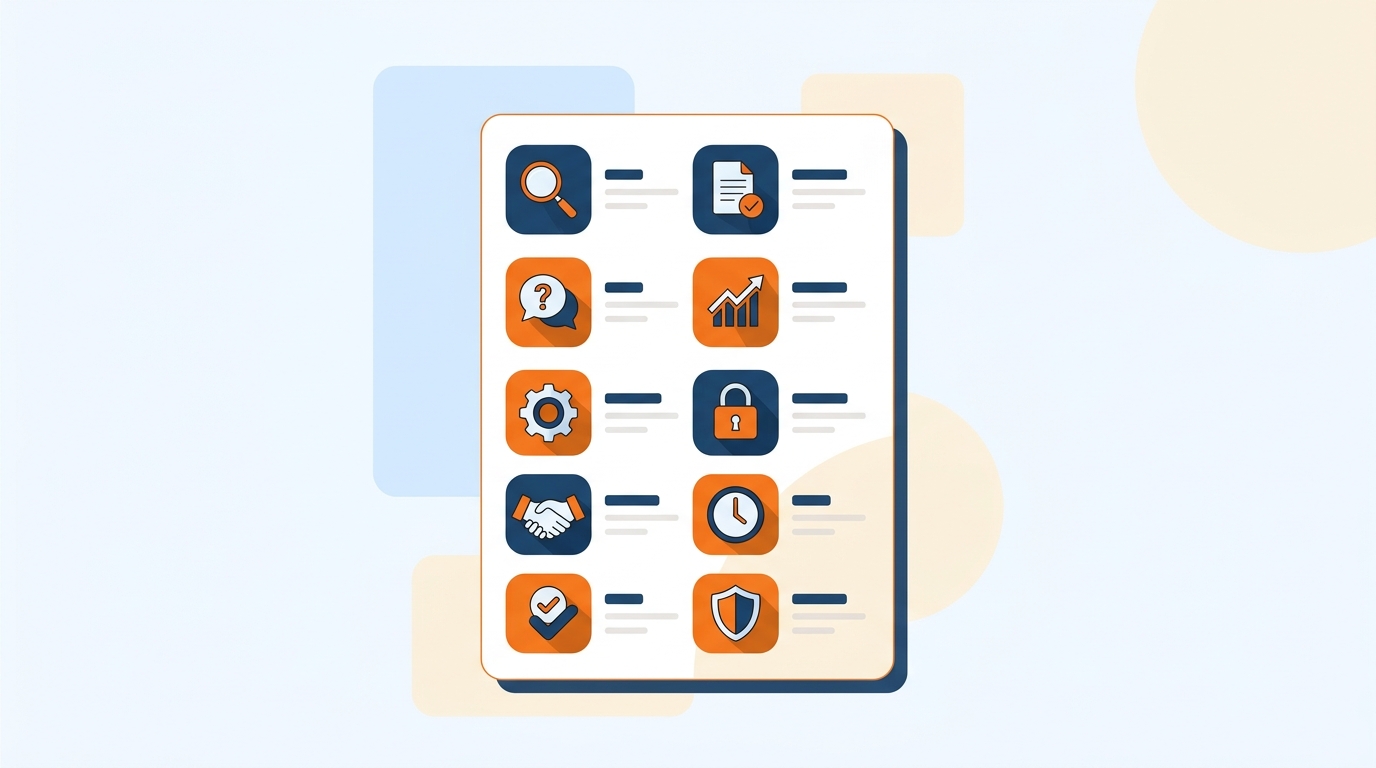
The Amazon DSP Agency Vetting Checklist: 9 Questions to Ask Before Signing
This is the actual vetting checklist worth running before any contract gets signed. Ask all nine. If an agency dodges more than one or two, keep shopping.
- What's your minimum monthly DSP spend commitment, and why that number? Most agencies require between $15,000 and $50,000 a month in media spend before they'll take on management, separate from their fee. Ask them to justify the floor. If they can't explain how that spend level produces usable audience and attribution data, that's a red flag.
- Are you an Amazon Ads Verified Partner, and can you show proof? Verified Partner status means Amazon has reviewed the agency's operations, client results, and API usage. Ask for the badge and the listing in the Amazon Ads Partner Directory, not just a logo on a website.
- How do you access Amazon's data: SP-API and Advertising API, or manual console pulls? Agencies with real engineering resources pull data programmatically through the SP-API (Selling Partner API) and Advertising API. Shops without that infrastructure are exporting CSVs by hand, which caps how fast they can react and how deep their analysis goes.
- Can you walk me through an actual AMC query, not a dashboard screenshot? AMC fluency separates specialists from generalists. Ask them to describe, in plain language, how they'd build a query to trace a customer from a DSP display impression to a Sponsored Products purchase 14 days later. If they can't describe the logic, they haven't done it.
- What's your reporting cadence during ramp-up? Weekly reporting is the standard for the first 60 to 90 days of a new DSP relationship. "Monthly" or "whenever you check in" is not acceptable while the algorithm is still learning your audience segments.
- Which DSP inventory do you actually activate: display only, or video and OTT surfaces too? Many agencies default to static display because it's easier to manage. If Fire TV and Twitch matter to your category, ask for a media plan that names specific placements, not a generic "we run across the DSP network" answer.
- Do I get raw, log-level data or only aggregated reports? Walled-garden data access varies by agency tier and by what Amazon grants. Ask exactly what data leaves the platform and lands in your hands versus what stays locked inside the agency's dashboard.
- What markets have you actually run DSP campaigns in? If you sell across Amazon.com, Amazon.ca, Amazon.fr, and Amazon.de, ask for account structure examples in each, not just a claim of "global capability."
- What does month one look like, documented? A real agency has a repeatable onboarding process they can describe step by step. "We'll figure it out together" is not a process.
Pro Tip
Ask for a live screen-share of the agency's AMC workspace during the sales call, not a pre-recorded demo. Anyone can screenshot a dashboard. Watching someone build a query in real time tells you in about five minutes whether you're talking to a specialist or someone reading from a script.
What a Verified Partner Setup Actually Looks Like
Disclosure: I founded Les Pitchous, the agency referenced below. I'm using it as a worked example because I can describe the setup precisely, not because it's the only agency that meets this bar.
It helps to see what a "yes" to all nine questions looks like in practice. Les Pitchous is a Montreal-based agency holding Amazon Ads Verified Partner status, working exclusively on Amazon since 2021 across Sponsored Products, Sponsored Brands, Sponsored Display, DSP, and AMC.
What matters for this checklist is the data layer. Rather than relying on the console's native reporting alone, the agency pulls data directly through the SP-API and Advertising API, then combines that with AMC queries to trace actual customer paths: from a DSP impression on a third-party surface, through a Sponsored Products click, to a conversion weeks later. That stitched attribution is exactly what question four above is designed to surface. If the agency you're evaluating can't describe an equivalent pipeline, they're likely reporting DSP in isolation.
The second signal is multi-market coverage. Les Pitchous manages accounts across Amazon.ca, Amazon.com, Amazon.fr, and Amazon.de, which matters for brands expanding beyond a single storefront and needing consistent DSP logic across currencies, languages, and compliance regimes. That's the kind of concrete answer question eight should produce.
Whether you end up working with Les Pitchous or anyone else, use this as your baseline: book a free 30-minute Amazon Ads audit and see whether the agency diagnoses your account or just pitches at you. The difference is obvious within the first ten minutes.
Red Flags in DSP Agency Pitches
A few patterns show up again and again in pitches from agencies that aren't actually equipped to run DSP well.
- Case studies that are all Sponsored Products. If every result slide is about SP or SB performance and DSP gets one vague bullet, the agency likely added DSP as an upsell line item without building real capability behind it.
- Vague answers about AMC. "We use advanced analytics" is not an answer. Ask for specifics and watch for hand-waving.
- No clear spend minimum or timeline for results. Agencies that don't set expectations around minimum spend or ramp-up time either haven't run enough accounts to know the pattern, or they're avoiding the conversation because the real minimum is higher than what they think you want to hear.
- Long-term contracts with no pilot period. A 12-month lock-in before you've seen a single week of performance data is a sign the agency is optimizing for retainer revenue, not for your account.
- No answer on AMC instance ownership. If they can't tell you whose instance the queries live in, assume it's theirs, and assume you lose it when the relationship ends.
What to Have Ready Before an Agency Runs Your First DSP Campaign
Even the best Amazon DSP agency can't produce good results if your account isn't ready. Before onboarding starts, have these in place:
- Active Brand Registry on every marketplace where you plan to run DSP.
- A first-party customer list (email or loyalty data) if you want custom audience segments rather than only Amazon's built-in audiences.
- At least 90 days of historical Sponsored Products data, which agencies use to seed early audience and creative decisions.
- Clear KPIs going in: new-to-brand customers, ROAS (return on ad spend), or brand awareness lift? DSP campaigns get structured very differently depending on the answer.
- Creative assets in the right formats for display, video, and any OTT placements you plan to activate.
On process, the standard worth benchmarking against is a documented audit-to-action-plan timeline. Les Pitchous runs a seven-day process from initial account audit to a concrete prioritized action plan, which is the kind of structured onboarding to expect from any agency you hire. If an agency offers a free short audit call, take it even if you're not planning to hire them yet. It's a fast way to benchmark where your own account stands before you commit budget anywhere.
One thing that gets missed constantly in DSP planning: the listing your DSP traffic lands on has to convert once the click happens, or the media spend is wasted regardless of how sharp the targeting was. If your bullets, backend keywords, or A+ Content haven't been touched in a while, fix that before an agency starts driving cold traffic at scale. Superlisting.io automates that listing readiness check, generating optimized titles, bullets, and A+ Content modules from an existing listing URL before your DSP budget goes live.
In-House vs Agency vs Hybrid: Which Amazon DSP Model Makes Sense?
Not every brand needs a full external Amazon DSP agency relationship. The right model depends on spend level, internal bandwidth, and how much of your growth depends on paid media versus organic and retail.
In-House vs Agency vs Hybrid
| Model | Best fit | Watch out for |
|---|---|---|
| In-house | Brands over roughly $250K/month in Amazon ad spend with a dedicated media buyer who can invest time learning AMC | Long ramp-up, single point of failure if that person leaves |
| Agency | Brands at $20K to $150K/month wanting specialist coverage without hiring a full team | Vetting quality matters enormously; a bad agency here is worse than no DSP at all |
| Hybrid | Brands with an internal marketing lead owning strategy and KPIs, with an agency executing the technical DSP and AMC work | Requires a clear division of ownership; ambiguity causes finger-pointing when results dip |
To be fair, none of these models is automatically right. A brand with a strong in-house data analyst and a small, focused catalog can sometimes run DSP better than an outsourced team juggling forty accounts. The checklist matters more than the model.
Mistakes to Avoid When Hiring a DSP Agency
Judging DSP capability by Sponsored Products results. These are different skill sets running on different auction mechanics. An agency that crushes ACoS (Advertising Cost of Sale) on Sponsored Products can still be mediocre at DSP audience strategy. Ask for DSP-specific case examples, not adjacent ones.
Signing a long-term contract before a pilot. A 90-day pilot at a smaller budget tells you more about an agency's real capability than any pitch deck.
Common Mistake to Avoid
Locking into a 12-month DSP retainer without a defined pilot window is the single most expensive mistake we see brands make. Ask for a 60 to 90 day pilot with clearly defined checkpoints, and put an exit clause in writing before you sign anything longer.
Ignoring who owns the AMC instance. Some agencies build AMC queries inside their own agency-level instance rather than your brand's. If the relationship ends, you can lose access to historical query logic and audience segment definitions. Get clarity in the contract on data portability before you start.
Choosing on price alone. The cheapest management fee often correlates with the least experienced team on your account. A lower fee paired with a higher minimum spend requirement can still cost more in wasted media dollars than a slightly higher fee from a specialist who gets the targeting right from week one.
Frequently Asked Questions
How much does an Amazon DSP agency cost in 2026?
Amazon DSP agency management fees typically run as a percentage of managed ad spend, commonly 10% to 20%, on top of a required minimum monthly media spend that usually falls between $15,000 and $50,000. Some agencies charge flat retainers instead. Always confirm whether the management fee is separate from ad spend or bundled into it.
What is the difference between an Amazon DSP agency and a Sponsored Ads agency?
A Sponsored Ads agency manages Sponsored Products, Sponsored Brands, and Sponsored Display, which are keyword or product-targeted and run inside Amazon's search results and detail pages. An Amazon DSP agency manages programmatic display and video campaigns that run both on and off Amazon, targeting audiences rather than keywords, and requires AMC fluency that Sponsored Ads management doesn't demand. The strongest agencies do both and coordinate them so DSP doesn't cannibalize Sponsored Display retargeting.
How do I know if an Amazon DSP agency is legitimate?
Verify three things: their listing in the Amazon Ads Partner Directory, whether they pull data through the Advertising API rather than manual console exports, and whether they can describe an AMC query live rather than showing a dashboard screenshot. Agencies that pass all three are a small minority of the ones that pitch you.
Do I need Amazon Brand Registry to use DSP?
You don't strictly need Brand Registry to run DSP as a vendor or through certain agency arrangements, but most practical DSP setups, especially those tied to Sponsored Ads retargeting or AMC analysis, work best with an active Brand Registry account. Check current requirements in Amazon Seller Central before assuming either way.
What is an Amazon Ads Verified Partner?
An Amazon Ads Verified Partner is an agency Amazon has reviewed and approved based on client results, tool usage, and operational standards. It's not a guarantee of quality on every account, but it's a meaningful signal that the agency passed Amazon's own vetting, which most agencies never do. You can confirm status directly in the Amazon Ads Partner Directory.
Which is the best Amazon DSP agency for a Canadian brand?
There's no single best agency, but for brands selling on Amazon.ca and expanding into Amazon.com or European marketplaces, look for a Verified Partner with demonstrated multi-marketplace account structures and bilingual capability for .ca and .fr listings. Les Pitchous, based in Montreal, is one example of a Verified Partner covering .ca, .com, .fr, and .de with combined DSP and AMC management.
Can I run Amazon DSP myself without an agency?
Yes. Self-serve DSP access is available directly through the Amazon Advertising console, and Amazon has lowered the entry threshold in recent updates. The tradeoff is time: DSP and AMC have a real learning curve, and running it well without dedicated headcount usually means a slow, expensive ramp-up while you learn the lessons an experienced agency has already learned across dozens of accounts.
Conclusion: Pick the Process, Not the Name
The agency name on the pitch deck matters less than whether they can answer all nine questions above without flinching. Verified Partner status, real API access, AMC fluency, and a documented onboarding process are the actual signals. Everything else is marketing.
With Q4 and BFCM 2026 planning already underway for most brands, run this vetting process now, not in October when budgets are locked and switching agencies mid-quarter becomes painful. If you want a second opinion on your account before you commit budget anywhere, Les Pitchous offers a free 30-minute Amazon Ads audit with no commitment.
And make sure the listings your ad spend points to are ready to convert before the first impression serves. Start free with Superlisting to optimize your listing content before your next campaign goes live, no credit card required.
Tags
Ready to Optimize Your Amazon Listings?
Start using AI-powered optimization to rank higher and sell more.
Try SuperListing Free